Best Shopify B2B Payment Terms Apps: 2026 Comparison
A 2026 comparison of the best Shopify B2B payment terms apps, with an honest map of which apps replace native B2B checkout and which extend it.
Key Takeaways
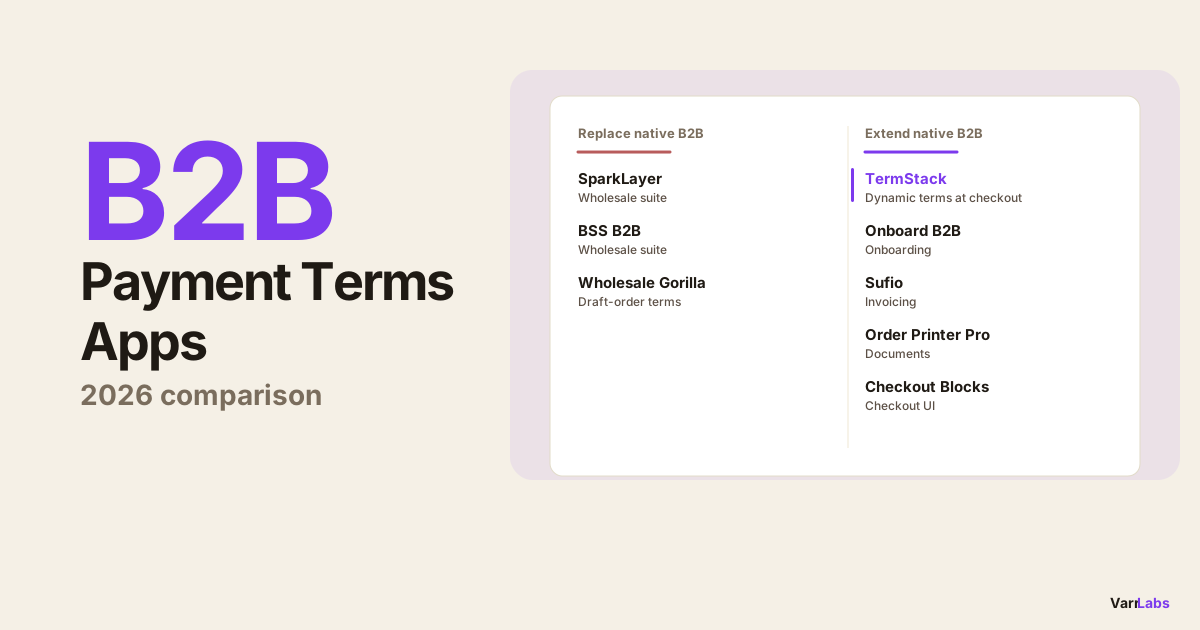
- 1Shopify B2B payment terms apps fall into two groups: apps that replace native B2B checkout (SparkLayer, BSS, Wholesale Gorilla) and apps that extend it (TermStack, Onboard B2B, Sufio, Order Printer Pro, Checkout Blocks).
- 2Native Shopify terms are static per company location: one term per buyer, applied to every order regardless of size, history, or cart.
- 3Wholesale suites bundle terms inside a full ordering system. Extend apps each do one job: dynamic terms, onboarding, invoicing, or checkout customization.
- 4Pricing ranges from about $7/month for invoicing (Sufio) to $99/month and up for a dynamic terms rules engine.
- 5TermStack is the app in this list that changes the native payment term automatically at checkout based on conditions you set, on Shopify Plus.
Search "best Shopify B2B payment terms app" and you get a list of ten apps that supposedly all do the same thing. They don't. Most of them aren't even in the same category.
Here's the split that actually matters, and almost nobody says out loud: most "wholesale" apps replace Shopify's native B2B checkout with their own ordering system. A smaller set works on top of native B2B. And only one applies different payment terms automatically at checkout based on conditions you set.
This post is the honest version of that list. What each app actually does for payment terms, who it's for, roughly what it costs, and one straight verdict per app, including where our own app isn't the right pick.
First, what Shopify does natively
Before you add any app, know what you already have. On Shopify you assign payment terms per company location under Customers > Companies > [Company] > [Location]. You pick a template and it sticks.
The native templates are Net 7, Net 15, Net 30, Net 45, Net 60, Net 90, and Due on Fulfillment. In April 2026 Shopify moved the foundational B2B feature set onto all paid plans, so basic company accounts and terms are no longer strictly a Plus thing. Deposits, partial payments, and payment customization at checkout still lean on Shopify Plus.
The catch is that native terms are static. One term per company location, applied to every order from that buyer, no matter the size, the buyer's history, or what's in the cart. If your terms are simple and consistent per account, native Shopify is genuinely enough and you can stop reading. For a fuller picture of the native setup, see the complete guide to B2B payment terms on Shopify Plus.
You reach for an app when static terms stop matching how you actually sell.
The split nobody tells you about
Apps that show up under "B2B payment terms" fall into two buckets. Getting this wrong is how merchants end up paying for the wrong tool.
Apps that replace native B2B checkout. These are full wholesale suites. They bring their own pricing, ordering, and often their own checkout or draft-order flow. Payment terms are one feature inside a much bigger system. If you go this route, you're largely stepping outside Shopify's native B2B.
Apps that extend native B2B checkout. These work on top of Shopify companies and the native checkout. They add one capability well: dynamic terms, invoicing, onboarding, or checkout customization. You keep Shopify's native B2B and layer on the piece you're missing.
Neither bucket is better in the abstract. But you should know which one you're buying into before you install anything. For the native-versus-app decision itself, this breakdown of native vs. app B2B terms goes deeper.
Apps that replace native B2B checkout
SparkLayer B2B & Wholesale
SparkLayer is a full B2B ordering layer bolted onto your existing store. Custom and tiered price lists, quick-order pads, sales-agent tools, company accounts. It installs without a rebuild, but it becomes the wholesale experience your buyers use.
Pricing starts with a free plan, then Starter at $49/month, Growth at $149/month, Pro at $299/month, and Enterprise from $499/month.
Verdict. Strong if you want a complete wholesale storefront and ordering system, not just terms. Overkill if all you need is smarter payment terms on native B2B.
BSS B2B Wholesale Solution
BSS is a broad B2B toolkit: custom pricing, price lists, quantity breaks, approvals, tax control, and net terms. Its net terms feature lets buyers check out now and pay later, managed inside the app's own workflow.
Pricing runs Free, Essential at $25/month, Advanced at $50/month, and Platinum at $100/month.
Verdict. Good value if you want a wide wholesale feature set on a budget. The terms are part of BSS's own system rather than Shopify's native payment terms, so you're adopting their way of doing B2B.
Wholesale Gorilla
Wholesale Gorilla is a well-liked wholesale suite. Its net terms work through draft orders: pre-approved customers submit unpaid draft orders, and you review, edit, invoice, and collect payment outside Shopify, then mark the order paid.
Net terms sit on the Advanced and Premium plans.
Verdict. Fine if you're comfortable running terms as a manual draft-order and invoicing process. It's not automated terms at checkout; someone on your team still handles each order by hand.
Apps that extend native B2B checkout
TermStack (that's us)
TermStack is a rules engine for B2B payment terms on Shopify Plus. You write ordered rules with conditions and an outcome, and at checkout a Shopify Function evaluates them top-down and applies the first match. Conditions include order total, customer tags, company or company location, whether it's the buyer's first order, how many orders they've placed, cart collections, and the terms already assigned to that location.
So you can build logic like: first order requires a deposit, orders over $20,000 from an established account get Net 60, carts with high-risk products get Net 7. It runs server-side in a few milliseconds, and you can test rules in a simulator before publishing. Pricing starts at $99/month with a 14-day trial, and plans scale from there.
TermStack applies the right B2B payment terms automatically at checkout based on conditions you define: order total, buyer history, customer tags, company, collections, and more. Try it free for 14 days →
The honest framing: in this list, TermStack is the one app that changes the native payment term automatically at checkout based on conditions, instead of replacing checkout or handling terms after the order. That's also its limit. It needs Shopify Plus, and it decides terms, it doesn't send invoices or print documents. For how conditional deposits work in practice, see dynamic payment terms and deposits on Shopify Plus.
Onboard B2B
Onboard B2B (by Helium) handles the front of the funnel: custom wholesale application forms, one-click approval that creates the Shopify B2B company and assigns catalog, payment, and tax settings, plus storefront gating so only approved buyers can shop.
Verdict. The right tool for onboarding wholesale accounts cleanly. It sets terms once, at approval. It doesn't vary terms order to order, so pair it with native terms or a rules engine if your policy changes after signup.
Sufio: Professional Invoices
Sufio is invoicing and accounts receivable. It syncs with Shopify payment terms, puts correct due dates on invoices, sends automatic overdue reminders, and handles PO numbers and wholesale pricing on the document. Pricing starts around $7/month, with payment-terms support on the Professional plan and up.
Verdict. The pick when your gap is the paperwork and the chasing, not the terms logic. Sufio documents and collects on the terms; it doesn't decide them at checkout. It pairs well with native terms or a rules engine.
Order Printer Pro
Order Printer Pro generates and auto-delivers branded PDF invoices, packing slips, and receipts, with B2B and multi-currency support.
Verdict. A documents app, not a terms app. Useful alongside your terms setup for clean invoices and slips, but it has no say in what terms a buyer gets.
Checkout Blocks
Checkout Blocks is Shopify's no-code checkout customizer, free for Plus. Add fields, banners, and upsells, and hide, rename, or reorder shipping and payment methods at checkout.
Verdict. Great for shaping the checkout itself. It's not a payment-terms engine, though. Payment-method shaping and payment-terms logic are different jobs, so it complements a terms app rather than replacing one. If you're weighing a custom function against an app, payment customization function vs. app covers that tradeoff.
Quick comparison
| App | Category | What it does for terms | Best for |
|---|---|---|---|
| SparkLayer | Replaces native B2B | Terms inside a full wholesale suite | A complete wholesale storefront |
| BSS B2B | Replaces native B2B | Buy-now-pay-later in its own workflow | Broad B2B features on a budget |
| Wholesale Gorilla | Replaces native B2B | Net terms via manual draft orders | Draft-order-driven wholesale |
| TermStack | Extends native B2B | Dynamic terms by condition at checkout | Conditional terms on native B2B (Plus) |
| Onboard B2B | Extends native B2B | Sets terms once at approval | Wholesale onboarding and gating |
| Sufio | Extends native B2B | Invoices and reminders on set terms | Invoicing and accounts receivable |
| Order Printer Pro | Extends native B2B | None (documents only) | PDF invoices and packing slips |
| Checkout Blocks | Extends native B2B | None (checkout UI only) | Checkout customization on Plus |
How to choose in four questions
You don't need to compare ten apps. Answer these and the list gets short fast.
- Are you on Shopify Plus? Dynamic terms and deposits at checkout lean on Plus. If you're not on Plus, your realistic options are native terms and invoicing-style tools.
- Do you want to keep native B2B checkout or replace it? If you want a full wholesale portal, look at SparkLayer, BSS, or Wholesale Gorilla. If you want to keep Shopify's native B2B, look at the extend apps.
- Are your terms static enough to set once per company? If yes, native Shopify already does this. Don't buy an app to solve a problem you don't have.
- Do your terms need to change by condition? Order size, buyer history, product mix, risk. If they do, you need a rules engine that runs at checkout.
Most merchants overbuy here. They install a full wholesale suite when they just needed conditional terms, or they wrestle with draft orders when native terms plus a rules engine would have run itself.
Frequently Asked Questions
Summary
The "best" Shopify B2B payment terms app depends entirely on which job you have. Full wholesale suites like SparkLayer, BSS, and Wholesale Gorilla replace native B2B with their own ordering system. The extend apps each do one thing well: Sufio for invoicing, Order Printer Pro for documents, Onboard B2B for onboarding, Checkout Blocks for the checkout UI.
If your job is applying the right B2B payment terms automatically at checkout, without replacing your checkout or managing it by hand, that's what TermStack is built for. Define your rules, test them in the simulator, publish, and every B2B checkout gets the right terms from then on.

