How a US Toy & Gift Wholesaler Automated B2B Payment Terms on Shopify
How a US toy and gift wholesaler automated B2B payment terms and deposits at Shopify's native B2B checkout, replacing draft orders and spreadsheets with rules.
Key Takeaways
- 1A US toy and gift wholesaler selling to thousands of specialty retailers automated its B2B payment terms at Shopify's native B2B checkout.
- 2Net terms and deposits now apply themselves through rules, with no draft orders, spreadsheets, or sales-ops intervention.
- 3A handful of prioritized rules keyed to order value and buyer attributes govern thousands of company accounts.
- 4Every rule change is versioned and logged, and the simulator previews which rule fires before anything is published.
- 5They have run TermStack in production since spring 2026 and left the app's first review: five stars.
A US toy and gift wholesaler selling to thousands of independent and specialty retailers replaced its manual B2B payment terms process with automated rules at Shopify's native B2B checkout. Net terms and deposits now apply themselves, with no draft orders, no spreadsheets, and no sales-ops intervention. They have been running TermStack in production since spring 2026 and left the app's first review: five stars.
The problem: payment terms that lived in people's heads
If you run wholesale on Shopify Plus, this will sound familiar.
Your buyers do not all pay the same way. A long-standing retail account gets Net 30. A large first order needs a deposit before it ships. A new stockist starts on tighter terms until they have built history. The policy is clear enough, but Shopify's built-in B2B payment terms are static, set once per company.
So the gaps get filled by hand. Orders that do not fit the default get rebuilt as draft orders. Exceptions live in a spreadsheet, or worse, in one person's memory. Every workaround is a chance for the policy to drift: one buyer gets terms they should not have, another gets asked for a deposit they have long outgrown.
For this wholesaler, a US toy and gift company selling to thousands of independent and specialty retailers through Shopify Plus native B2B, that manual layer did not scale. With that many company accounts, "handle the exceptions manually" is not a process. It is a queue.
What they changed: B2B payment terms as checkout rules
They installed TermStack and expressed their actual payment policy as checkout rules.
The structure that worked for them is the pattern we now see across wholesale merchants:
- A small set of prioritized rules covering the entire company base. Not one rule per company. Rules are keyed to conditions like order value and buyer attributes, so thousands of accounts are governed by a handful of lines of policy.
- Deposits reserved for where the risk actually is. Scenarios like large orders or first-time buyers get a deposit applied automatically at checkout, instead of negotiated over email.
- The simulator before every change. Terms rules touch checkout, so you do not want to find mistakes in production. They preview which rule fires for a given company and cart before publishing, and every change is versioned with instant rollback.
Because the rules run as a Shopify Payment Customization Function, they execute inside checkout itself. No theme changes, no redirect, no separate portal. Buyers see the correct terms and any deposit due at the moment they pay, on Shopify's native B2B checkout.
For the exact rule structures this vertical runs on, first-order prepay, seasonal dating, and large-order deposits, the payment terms playbook for toy and gift wholesalers breaks each one down with numbers.
The result
Since going live in spring 2026:
- Zero manual draft orders for terms handling. The policy applies itself at checkout.
- One policy, everywhere. Every buyer gets exactly the terms the rules say, with no drift and no forgotten exceptions.
- Auditable by design. Every rule change is logged with who changed what and when, and the simulator can answer "why did this order get these terms?" in seconds.
And when they needed something the app did not do yet, they asked, and had it within days.
Their verdict, in their own words:
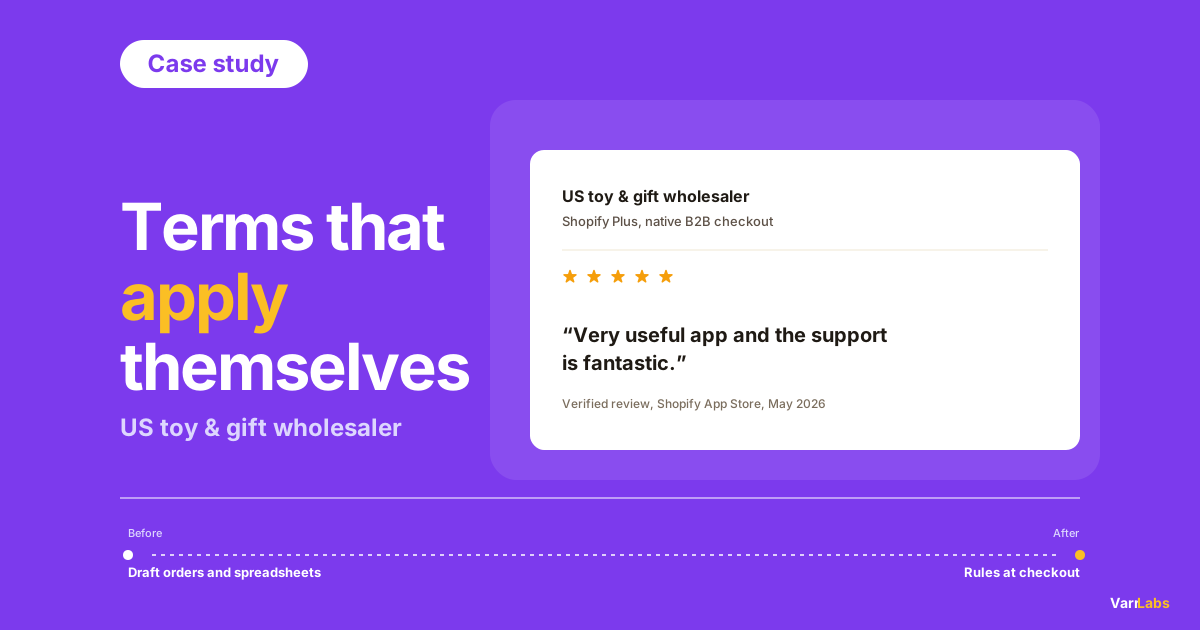
“Very useful app and the support is fantastic.”
Verified review, Shopify App Store, May 2026
Case facts
| Merchant | US toy and gift wholesaler, sells to thousands of independent and specialty retailers |
| Platform | Shopify Plus, native B2B checkout |
| Replaced | Draft orders, spreadsheets, manual exceptions held in people's heads |
| Now runs | TermStack, a small set of prioritized payment terms and deposit rules |
| Rules key on | Order value and buyer attributes, evaluated in priority order at checkout |
| Governance | Every change versioned and logged, previewed in the simulator before publishing |
| Live since | Spring 2026 |
| Source | Verified Shopify App Store review, May 2026 |
Frequently asked questions
Sound like your wholesale operation?
If you are on Shopify Plus with native B2B and your payment terms still involve draft orders, spreadsheets, or "ask Sarah," this is exactly the problem TermStack was built for. A handful of rules replaces the manual layer, and the policy stops depending on who is at their desk.
Define net terms and deposit rules once, preview them in the simulator, and publish to Shopify's native B2B checkout. Try TermStack free for 14 days →
- See it on the App Store →
- Try the live demo store → to see rules applying at a real B2B checkout
- Want help setting up your first rules? We will do it with you on a free 30-minute call: your policy, live at checkout, before the call ends. Email termstack@varrlabs.com.
TermStack applies dynamic Net 7–Net 90 terms and deposits at Shopify Plus native B2B checkout, using rules for companies, tags, locations, order value, and order history. Built by Varr Labs.

