Credit Checks for B2B Buyers on Shopify Plus: When to Run Them
A practical decision framework for Shopify Plus merchants on when to run a credit check on B2B buyers, when to skip it, and what to use instead.
Key Takeaways
- 1A formal B2B credit check costs $40 to $200 or more depending on the bureau and depth, plus deal friction from 24 to 72 hours of delay. Reserve it for first orders over $20,000 from buyers you cannot verify through other channels.
- 2For most B2B orders on Shopify Plus, a deposit requirement and a first-order rule give you the same protection faster and cheaper than a formal credit report.
- 3Shopify Plus has no native conditional terms logic. Running tight defaults for new accounts and graduating them to full terms based on payment history covers most of the risk.
- 4TermStack lets you encode deposit requirements, first-order rules, and order-size gates as checkout conditions that run automatically without manual review.
A new wholesale buyer asks for Net 30 on their first $18,000 order. Do you pull a credit report on them, or do you just ship?
Most Shopify merchants have no real answer to this. They either skip credit checks entirely and hope for the best, or they over-engineer the process and add weeks of friction to deals that should close in a day. For a complete overview of how B2B payment terms work on Shopify Plus, the complete guide to B2B payment terms covers the full picture.
This post is a decision framework: when a credit check is worth the cost, when it isn't, and what to do instead when the formal process is overkill.
Why most Shopify merchants get this wrong
The formal B2B credit check came out of a world where extending net terms was a serious commitment with very few automated guardrails. You shipped goods, you waited 30 or 60 days, and you mostly had to trust that the buyer would pay. If they didn't, your options were collections agencies, lawsuits, or eating the loss.
In that world, pulling a Dun & Bradstreet report or running a trade reference check made sense for any meaningful order. The cost of the check was small compared to the cost of being wrong.
Shopify B2B doesn't quite live in that world anymore. You have customer tags. You have order history. You have Payment Customization Functions that can require a deposit, hide or reorder payment methods, or restrict available payment options based on rules you define. You can grant Net 30 today and quietly tighten it tomorrow if something feels off.
That changes the math. The cost of getting credit wrong is lower than it used to be, because you can hedge with structure instead of just trust. And the cost of running a formal credit check is higher than it looks, once you count the friction it adds to deals.
The question isn't whether to run credit checks. It's: for which buyers does a formal check actually pay for itself, given everything else you can already do at checkout?
What a credit check actually costs
A B2B credit check has three real costs, and merchants usually only count the first one.
The first is the obvious one. Experian Business and Equifax Business reports start around $40 to $50 for a basic credit score report, with deeper profiles costing more. Dun & Bradstreet pricing is less publicly listed but broadly comparable for a mid-tier business report. Cheaper sources exist, but you generally get what you pay for, and they often miss small or newer businesses entirely.
The second is the time cost. Pulling, reading, and interpreting a report takes 20 to 40 minutes if you know what you're looking for, longer if you don't.
The third is the deal cost, and it's the one that matters most. A credit check adds 24 to 72 hours of friction to a deal the buyer expected to close today. Some buyers will wait. Some will use that delay to talk to a competitor. Some will just remember the friction later. None of it shows up on a P&L, but it's real.
For a $40,000 order from a buyer who'd pay reliably anyway, you've spent $150 and three days to confirm what you already suspected. For a $2,000 first order from an unknown buyer, you've spent the same $150 and three days on a deal whose lifetime value might not justify either.
When a formal credit check is worth it
There are situations where pulling a report is the right call, and you shouldn't talk yourself out of it.
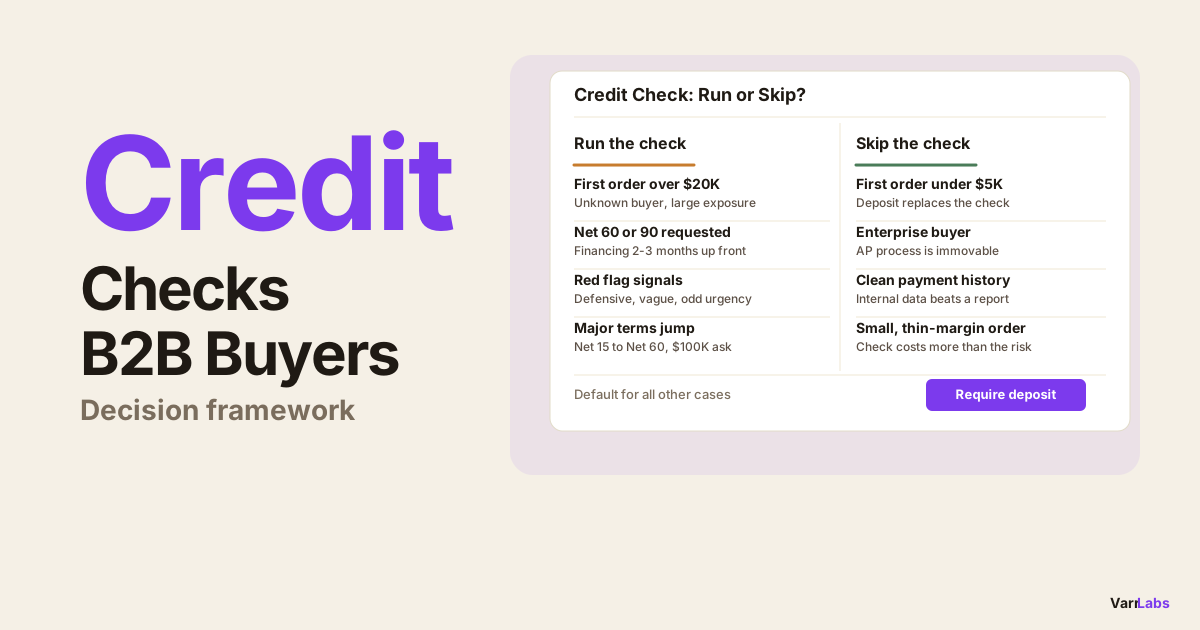
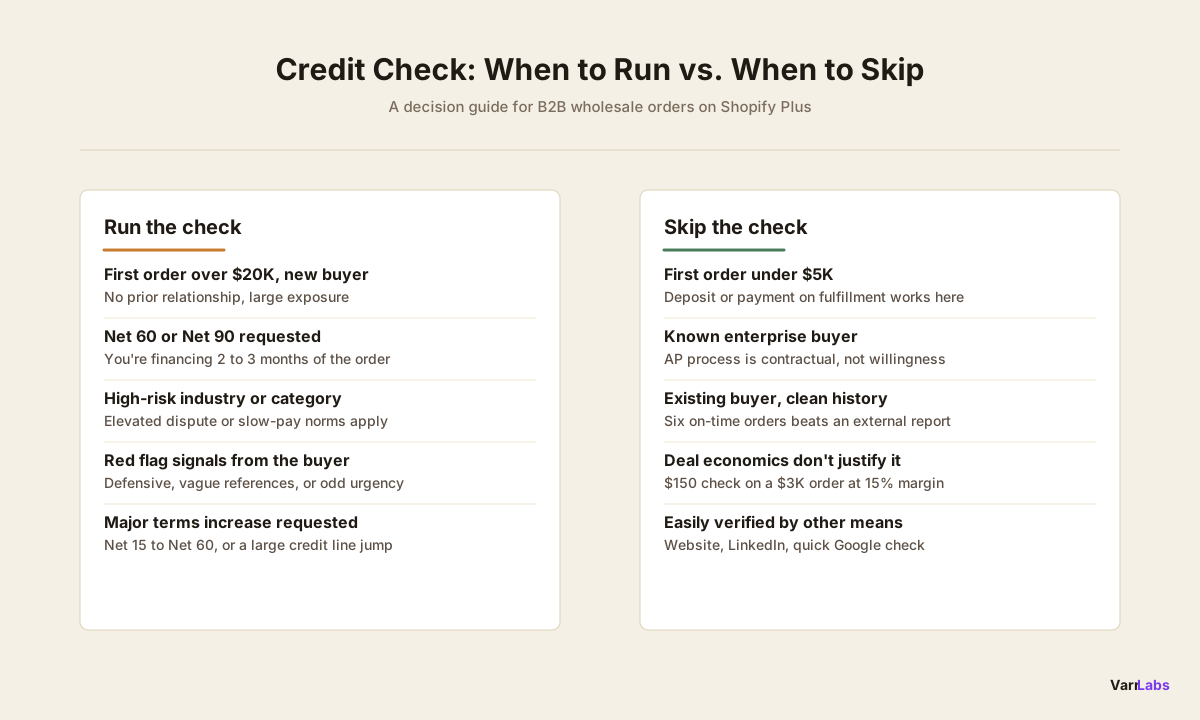
Large first orders from buyers you can't otherwise verify. If a brand-new account is asking for $25,000 in goods on Net 30 and you have no relationship, no shared contacts, and no public signals to evaluate them, a credit check is cheap insurance. The exposure is large enough that a $150 report makes sense.
Buyers asking for unusually long terms. Net 60 or Net 90 on a meaningful order means you're financing this buyer for two to three months. Before you commit working capital that long, you want some evidence that they pay their other suppliers.
Industries with elevated risk. Some categories have higher dispute rates and slower-pay norms. Hospitality during downturns, certain retail segments, newer DTC brands that don't yet have a track record. If your category is on the higher-risk end, the bar for credit verification is lower.
Buyers who hesitate or get defensive when you ask basic qualifying questions. This is a signal, not a verdict. But if a buyer pushes back on providing a business address, a tax ID, or basic references, that's worth digging into. A credit check is one way.
Recurring buyers who want a major increase in terms. An account that's been on Net 15 for three orders is now asking for Net 60 and a $100,000 credit line. That's a different conversation than their previous orders, and it warrants different diligence.
In each of these, the unifying logic is the same. The exposure is large, the unknowns are real, and a $150 report is small relative to the potential loss.
When you should skip it
For most B2B orders on Shopify Plus, you don't need a formal credit check. Here's when the formal process is overkill.
Small first orders. A $1,500 first order from a verifiable business doesn't justify the friction of a credit check, even if you have zero history. Require payment on fulfillment for the first one or two orders, then graduate them to terms once they've proven out. Order history is its own form of underwriting.
Buyers you can verify cheaply through other channels. A quick LinkedIn check, their company website, a Google search for their business name plus "lawsuit" or "complaint," and a look at how long they've been operating will give you most of what a credit report would tell you, for accounts under a certain threshold. Use the cheap signals first.
Existing buyers with clean payment history. If a buyer has been paying you on time for the last six orders, you don't need to run a fresh credit check every time they ask for slightly better terms. Internal history is more relevant than an external report.
Repeat enterprise buyers with established AP processes. Large retailers, government suppliers, hospital systems. These accounts have payment cycles dictated by contracts and processes that are basically immovable. A credit check tells you almost nothing actionable for these buyers, because you already know how they pay.
When the deal economics don't justify the work. If you're selling at a 15% margin and the order is $3,000, you're making $450 gross before any costs. A $150 credit check, 30 minutes of work, and 48 hours of delay is a significant tax on that deal. Run the numbers.
The decision framework
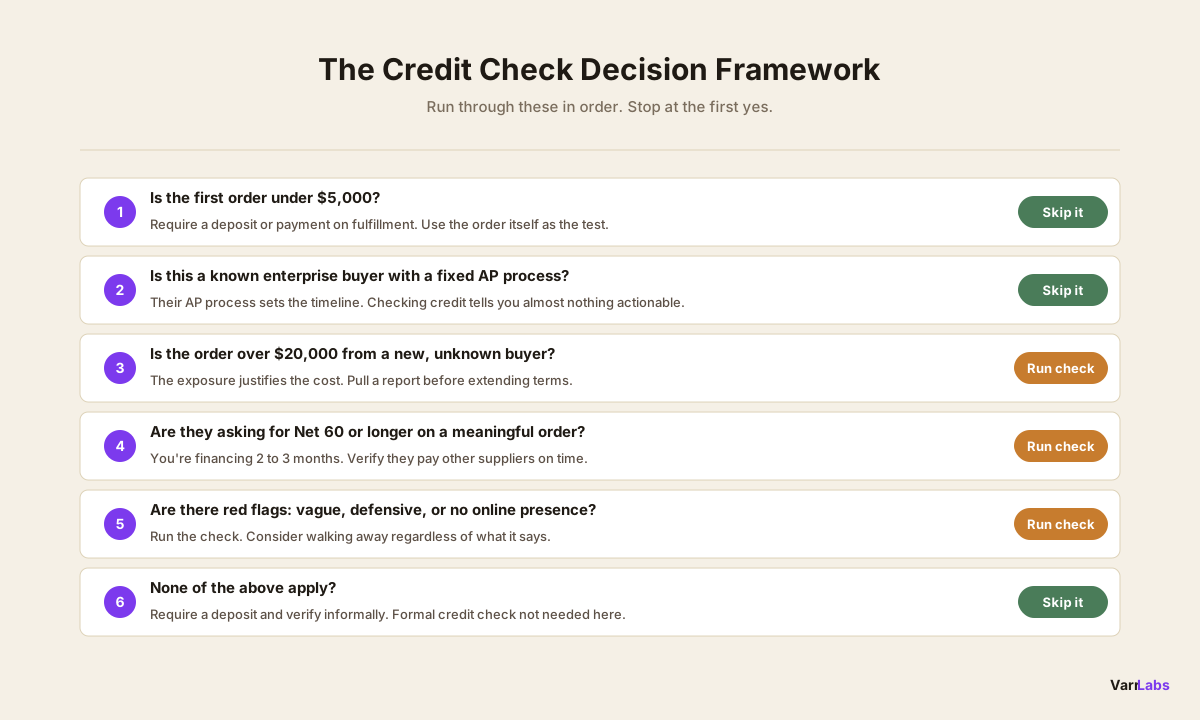
When a new wholesale account asks for terms, run them through this in order. Stop at the first answer.
-
Is the first order under $5,000? Skip the credit check. Require payment on fulfillment or a deposit. Use the order itself as the test.
-
Is this a known enterprise buyer with a real procurement process? Skip the credit check. Their AP department is the constraint, not their willingness to pay.
-
Is the order over $20,000 and the buyer is brand new? Run the credit check. The exposure justifies the friction.
-
Are they asking for Net 60 or longer on a meaningful order? Run the credit check, or require a deposit large enough that you don't need to.
-
Are there other signals that something's off? Defensive answers, no online presence, vague references, urgency that doesn't match the order size. Run the credit check, and consider walking away regardless of what it says.
-
None of the above? Skip the credit check. Use lighter-weight verification: business website, LinkedIn, a quick reference if you have one, and require a deposit on the first order.
This is not the whole answer to risk. It's a default that gets you to the right call quickly in most cases, without spending money or time on checks that don't change what you'd do.
What to do instead of a formal check, most of the time
The reason this framework lets you skip the credit check on most orders is that you have better tools available than merchants did even five years ago.
The cheapest and most powerful one is a deposit. A 30% or 50% deposit on the first order from an unknown buyer eliminates most of your downside without requiring a single phone call. If they pay the deposit, you've already validated they can transact and that they're serious. If they balk, they've told you something useful about themselves. The complete guide to requiring deposits on B2B orders in Shopify Plus covers how to set this up at checkout.
The second is a first-order rule. New accounts get tighter terms by default until they've cleared one or two orders. Net 30 only opens up after the first invoice clears. This is exactly the kind of underwriting a credit check is trying to simulate, except you're using actual payment behavior instead of a third-party report. If you do run a formal process, the wholesale credit application workflow covers what a new account should pay while you wait on it.
The third is order-size gating. Even an account on Net 30 doesn't get unlimited credit. Orders above a threshold either require a deposit, drop to Net 15, or require payment on fulfillment regardless of the account's normal terms. The rule runs at checkout. You don't have to remember to apply it.
The fourth is automatic tightening. If an account pays late, a tag like payment-risk reverts them to tighter terms on their next order. With TermStack, you tag the account and the checkout rules enforce the consequence automatically. You tag, the rules handle the rest.
None of this replaces a credit check when the exposure is large and the buyer is genuinely unknown. But it covers the long tail of B2B orders, which is where most merchants quietly lose money to bad assumptions.
How this looks on Shopify Plus
Shopify Plus gives you the building blocks: customer tags, company location settings, and Payment Customization Functions, which let you evaluate conditions at checkout and apply terms or require deposits based on whatever logic you define.
You can build these rules yourself with a developer. That works, and for stores with very specific or unusual requirements, it's the right path.
TermStack is a rules engine built on top of Payment Customization Functions for Shopify Plus B2B. Define conditions like "first order requires 30% deposit," "Net 30 only for accounts tagged verified," or "orders over $20,000 always require a deposit regardless of tag." The logic runs at checkout automatically. Try TermStack free for 14 days →
The point isn't the app. The point is that the question "should I run a credit check on this buyer" should rarely be the first lever you reach for. Structure your terms policy so that most accounts can graduate from conservative defaults to full terms based on actual behavior, and reserve formal credit checks for the genuinely large or genuinely ambiguous deals.
Frequently Asked Questions
Summary
Credit checks aren't dead. They're just not the default they used to be for most Shopify B2B merchants.
Use them when the exposure is large and the unknowns are real. Skip them when a deposit, a first-order rule, or a quick informal verification gets you to the same place faster and cheaper. Build your terms policy so most of the work happens automatically, and save your time for the deals where human judgment actually matters.
The merchants getting this right aren't the ones with the most thorough credit process. They're the ones whose default terms are tight enough that they don't need to investigate every new buyer to feel safe. TermStack is the toolkit for building that default layer on Shopify Plus: deposit rules, first-order gates, order-size conditions, and automatic tightening when behavior changes, all running at checkout without custom code.